
21st Century “Earth Medicine” — Net Zero Emission Action: NCKU Department of Life Sciences High School Biology Teacher Workshop
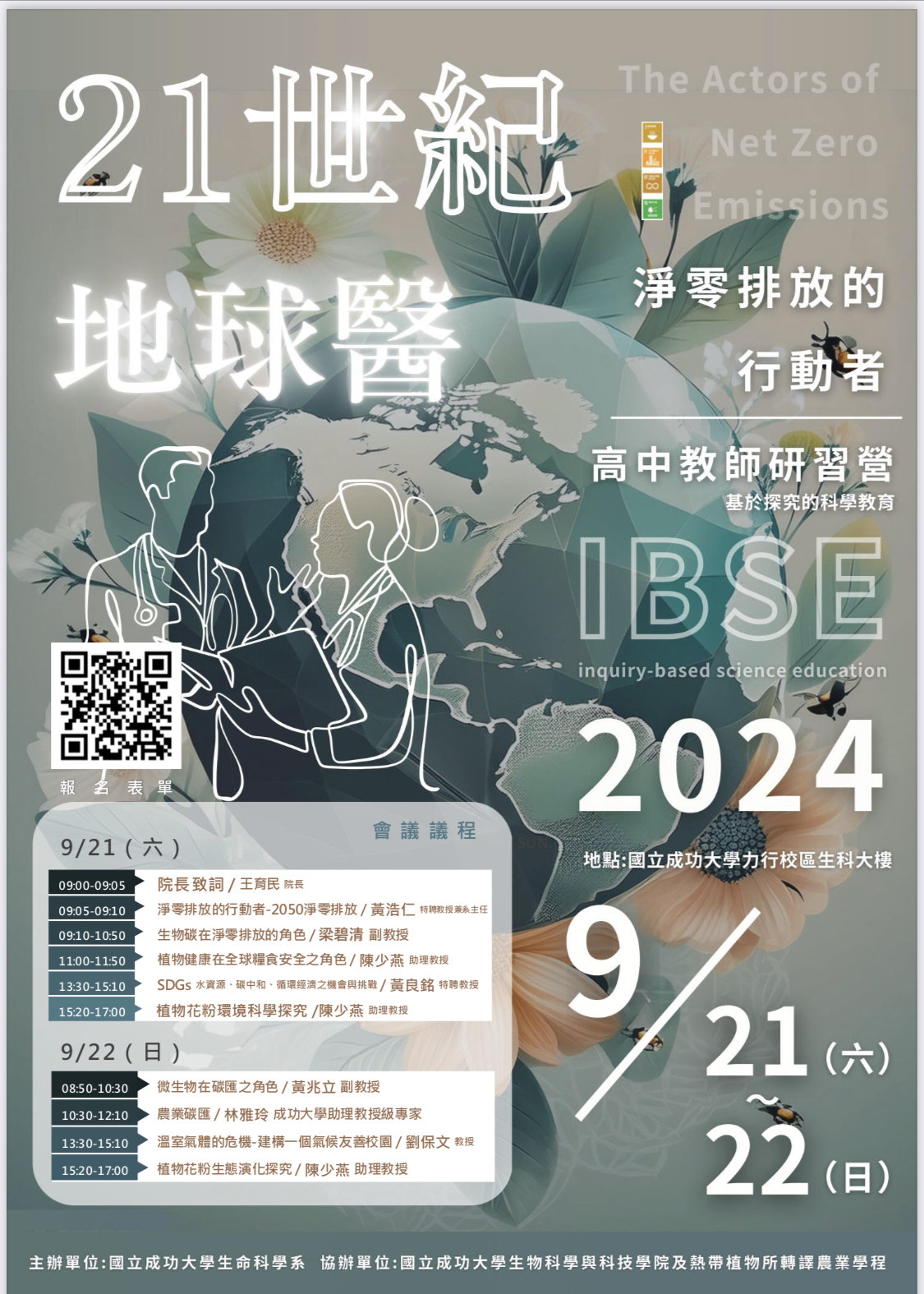
In response to global climate change and the biodiversity crisis, and to cultivate the next generation of citizens with scientific thinking and problem-solving abilities, the Department of Life Sciences at National Cheng Kung University is hosting the “21st Century Earth Medicine – Net Zero Emission Action” high school biology teacher workshop.
The program aims to foster educators’ awareness of respecting and protecting nature while promoting interdisciplinary knowledge exchange. The workshop includes topics such as biochemistry and molecular biology, ecology, and biodiversity, and further discusses net-zero emission strategies. Participants will learn scientific approaches to addressing climate challenges through real-world case studies and hands-on activities.
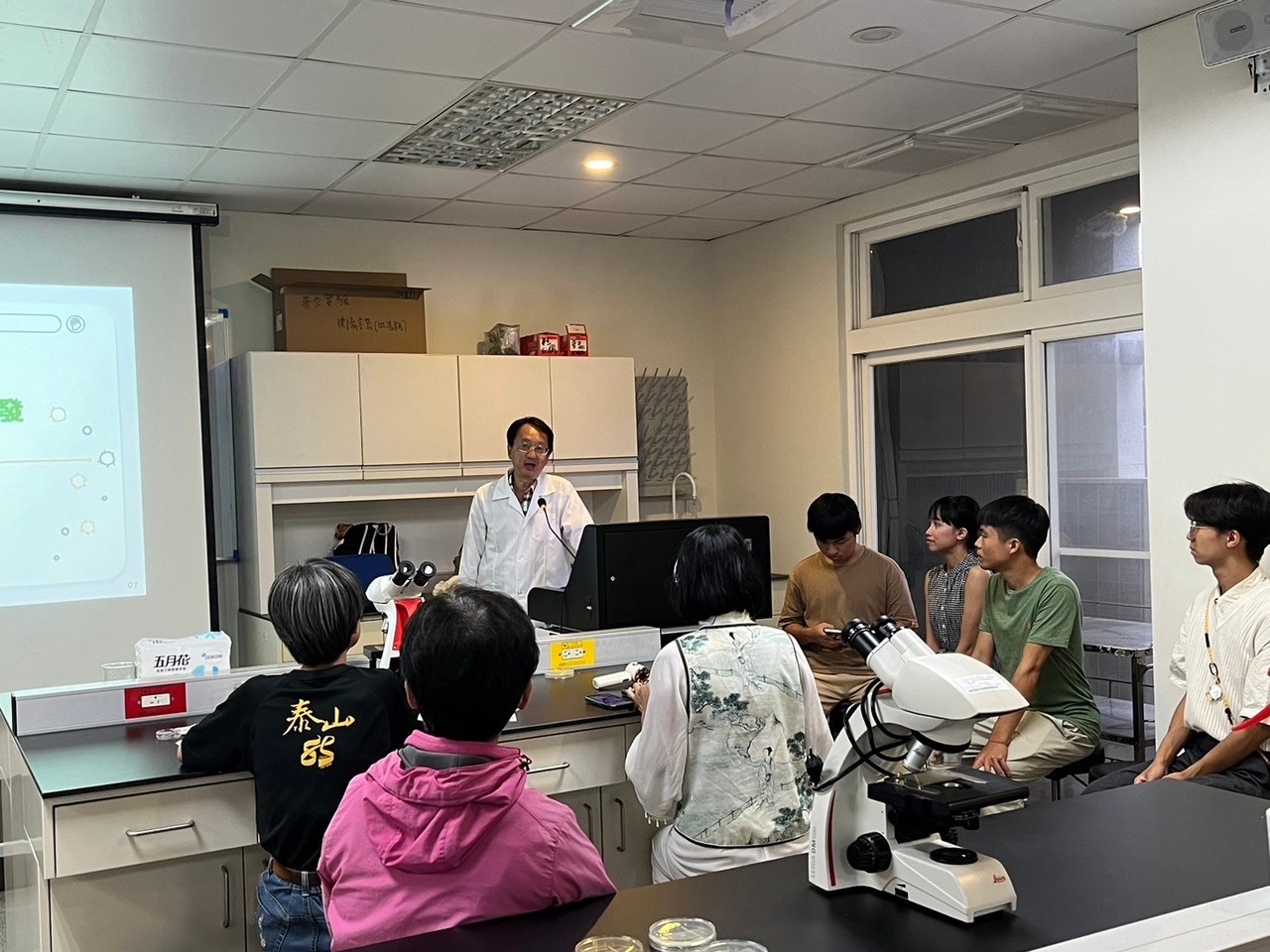
Caption: To address global climate change and biodiversity loss, NCKU Department of Life Sciences organizes the “21st Century Earth Medicine – Net Zero Emission Action” workshop for high school biology teachers. (Provided by NCKU Department of Life Sciences)
Promoting Inquiry-Based Science Education in New High School Curriculum
This workshop aligns with Taiwan’s 12-Year Basic Education reform, which incorporates “Natural Science Inquiry and Practice” as a required course in high school. The reform adopts an Inquiry-Based Science Education (IBSE) model, emphasizing hands-on learning to cultivate problem-solving skills and scientific literacy. IBSE aims to help students understand the nature of science and its real-world applications while encouraging critical thinking and independent learning.
In-service and pre-service teachers play a key role in this process. Department Chair Professor Huang Hao-Wen noted that the workshop provides training to help teachers master IBSE teaching methods so they can effectively apply them in classroom practice, integrating theory with hands-on learning to enhance student outcomes.
Earth Medicine and Net Zero: Global Movement and Local Practice
The rapid development of human activity has posed severe challenges to global biodiversity. Climate change-related issues such as extreme weather, wildfires, and emerging infectious diseases threaten both human and ecosystem health. A key focus of this workshop is the “Earth Medicine” concept, promoting global collaboration toward net-zero emissions in response to climate and environmental crises.
Participants will explore the United Nations Sustainable Development Goals (SDGs), discussing biodiversity, circular economy, and carbon neutrality. Experts from ITRI will present Taiwan’s net-zero strategies, demonstrating how innovative low-carbon technologies can drive industrial transformation and enhance Taiwan’s global supply chain competitiveness.
Expert Lectures and Hands-on Activities: Interdisciplinary Solutions
The workshop features lectures by multiple experts covering greenhouse gas issues, climate-friendly campus development, and plant health under climate change. Topics include Professor Liu Bao-Wen’s greenhouse effect lecture, Professor Chen Shao-Yan’s plant health research, Professor Huang Liang-Ming’s SDG and circular economy challenges, Professor Liang Bi-Ching’s net-zero carbon strategies, and studies on carbon sequestration by Professors Huang Zhao-Li and Lin Ya-Ling. These talks provide interdisciplinary scientific perspectives for real-world problem solving.
In addition, hands-on sessions such as “Plant Flower Microbial Cultivation Experiment” and “Co-cultivation of Pollen and Microorganisms” allow participants to engage directly in climate-related scientific experiments, strengthening their understanding and application of inquiry-based learning. These activities aim to help teachers bring scientific inquiry into their classrooms and inspire student interest in science.
The “21st Century Earth Medicine – Net Zero Emission Action” workshop not only enhances participants’ understanding of scientific literacy and environmental protection but also contributes to Taiwan’s progress toward net-zero emissions and climate-friendly campus development. In alignment with NCKU President Meng-Ru Shen’s educational philosophy, the workshop promotes interdisciplinary collaboration and knowledge sharing, providing diverse teaching resources that bridge education, science, and action for a more sustainable future.
Source: UDN Economic Daily — Zhang Jie