2024 Fifth Global Views USR University Social Responsibility Awards — NCKU Wins Two First Prizes and Two Model Awards, Becoming the Biggest Winner for Three Conseive Years
Text / NCKU News Center Photos / Yi Junfan
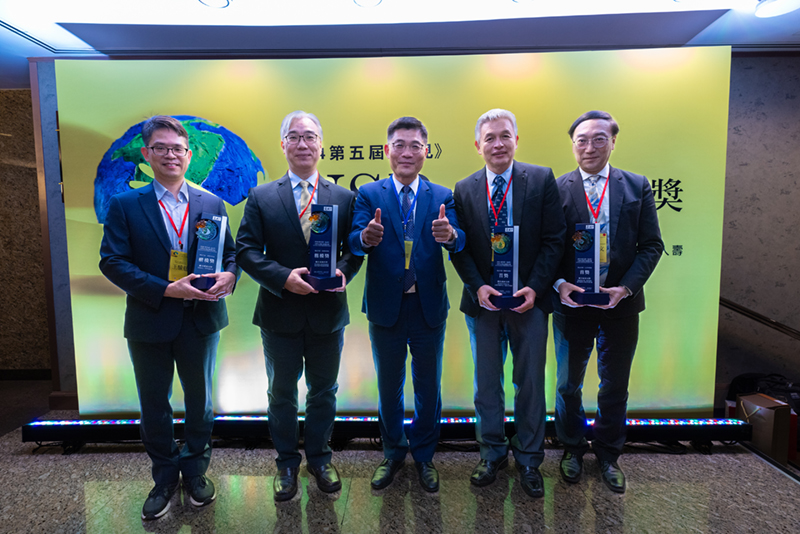
At the 2024 Global Views USR University Social Responsibility Awards ceremony, NCKU President Meng-Ru Shen (center) poses with Associate Professor Li-Wen Sung of the Department of Architecture (right 1) and Professor Wen-Hsi Lee of the Department of Electrical Engineering (right 2), who received First Prizes, as well as Professor Hao-Wen Wang of the Department of Life Sciences (left 2) and Professor Chi-Kuei Wang of the Department of Geomatics (left 1), who received Model Awards
The winners of the 2024 Fifth Global Views USR University Social Responsibility Awards have been announced, with National Cheng Kung University receiving two First Prizes and two Model Awards, making it the biggest winner for the third consecutive year. NCKU won First Prize in the “Talent Co-learning” category with the project “Improving School Lunches and Brightening Rural Communities: A Collaborative Education Program with Rural Elementary and Junior High Schools,” and another First Prize in the “Industry Co-Creation” category with the project “Industry-Government-Academia-Research Alliance Building Taiwan’s New Protective Mountain — The Passive Component Industry.” In the “Ecological Sustainability” category, the projects “Tree Seekers — Giant Tree Mapping Project” and “Practical Marine Wildlife Conservation Actions and Educational Outreach for an Ocean Nation” both received Model Awards. NCKU also had the highest number of shortlisted entries this year, with five nominations and four award-winning projects.
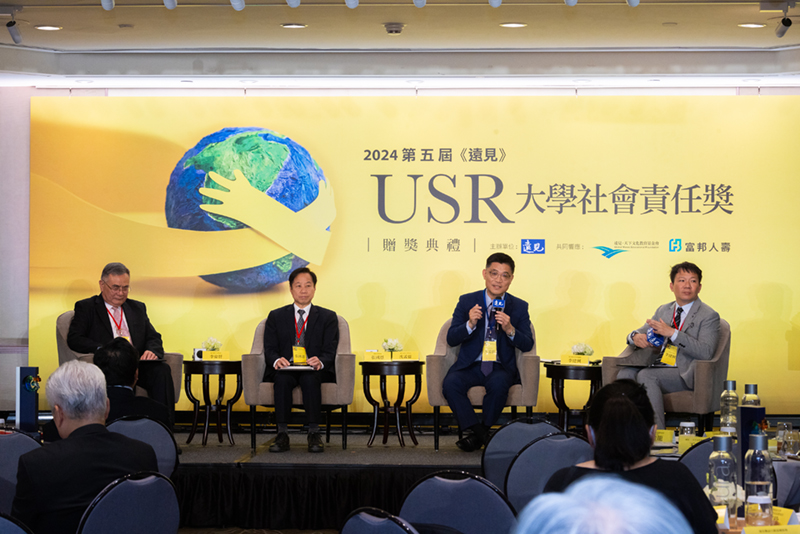
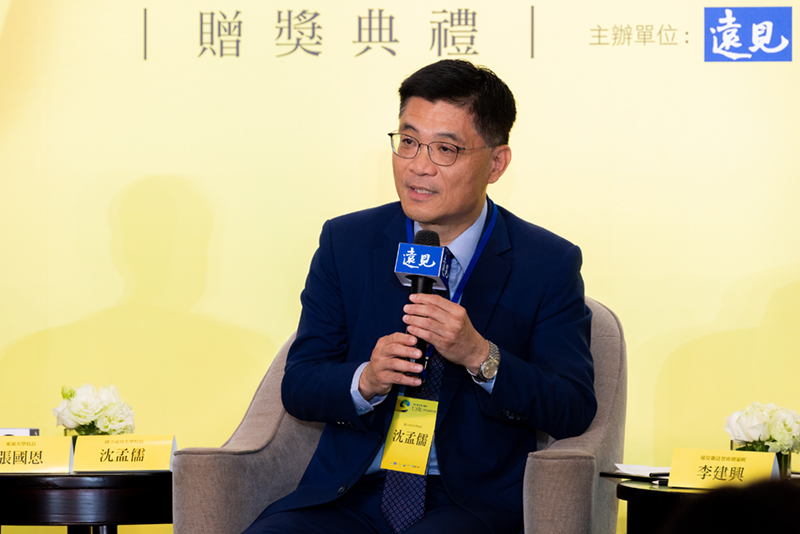
A forum titled “USR: The New Intangible Asset of Universities” was also held during the award ceremony, moderated by Global Views Monthly Think Tank Editor-in-Chief Chien-Hsing Lee, with participation from NCKU President Meng-Ru Shen, Tunghai University President Kuo-En Chang, and National United University President Wei-Hsien Lee, who shared their experiences in implementing USR initiatives
During the award ceremony on April 9, the forum “USR: The New Intangible Asset of Universities” was also held. Moderated by Global Views Monthly Think Tank Editor-in-Chief Chien-Hsing Lee, the session invited NCKU President Meng-Ru Shen, Tunghai University President Kuo-En Chang, and National United University President Wei-Hsien Lee to share their experiences in implementing USR initiatives. President Shen noted that every university has its own特色, and that NCKU builds upon its excellence in research to extend its expertise into various fields and regions, focusing on coexistence with industries and connections between local and international communities. By maximizing the public value of higher education and expanding regional academic influence, university USR becomes not a burden, but a sustainable mission.
President Meng-Ru Shen stated that university USR is no longer a burden, but a sustainable mission, and that the key to preserving regional revitalization is sustainability
President Shen further explained that sustainability is the most important factor in preserving regional revitalization. From NCKU’s perspective, regional revitalization requires a complete framework to be effective. At the foundation lies scientific research and innovation, followed by technology, economic strength, and cultural influence, together forming a sustainable arrow that enables universities to firmly support regional revitalization and ensure long-term development.
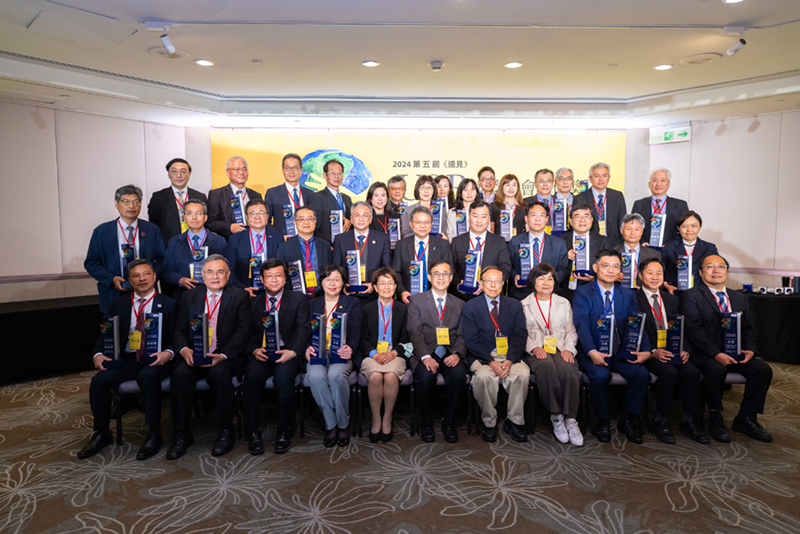
The 2024 Fifth Global Views USR University Social Responsibility Awards ceremony was held on the afternoon of April 9, bringing together more than 30 university representatives, including presidents, vice presidents, and sustainability officers
The 2024 Fifth Global Views USR University Social Responsibility Awards ceremony was held on the afternoon of April 9, bringing together more than 30 university representatives, including presidents, vice presidents, and sustainability officers. Global Views Monthly noted that USR has become a major focus in Taiwan’s higher education sector, with this year’s number of applications reaching record highs. Participating universities increased from 44 last year to 54, a growth of 27.7%, while submissions rose from 120 to 171, an increase of 42.5%. Ultimately, 6 First Prizes and 28 Model Awards were selected, with an award rate of 19.9%. A total of 25 universities received awards, representing 46.3% of participating institutions.
Global Views Monthly further analyzed that this year’s award-winning projects generally shared eight key characteristics: innovation, responsiveness, connectivity, influence, organic growth, feedback capability, replicability, and breakthrough potential. Particular attention was given to whether project themes and implementation methods were creative, addressed local needs, and could serve as valuable models for future replication.
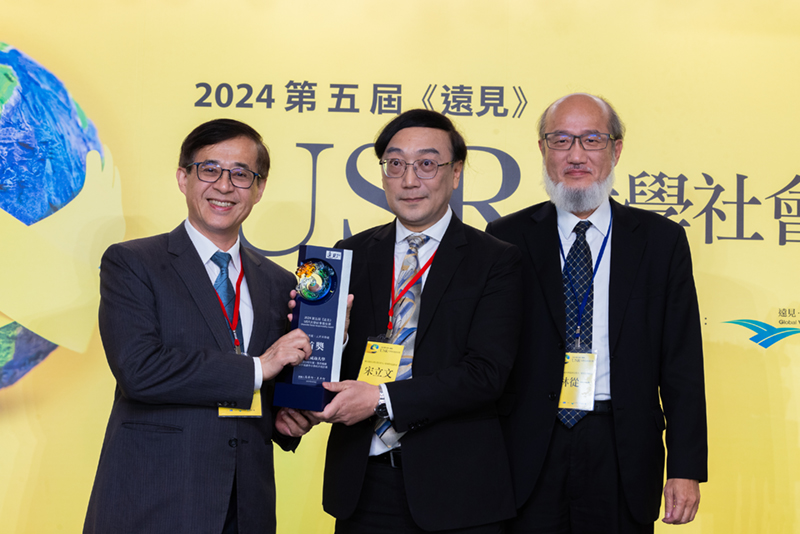
The project “Improving School Lunches and Brightening Rural Communities: A Collaborative Education Program with Rural Elementary and Junior High Schools” won First Prize in the “Talent Co-learning” category, represented by Associate Professor Li-Wen Sung of the Department of Architecture. On the right is Huafan University President Tsung-Yi Lin, co-principal investigator of the project
First Prize / Talent Co-learning Category / “Improving School Lunches and Brightening Rural Communities: A Collaborative Education Program with Rural Elementary and Junior High Schools”
Associate Professor Li-Wen Sung of NCKU’s Department of Architecture, representing the project team, stated that the project mobilized many teachers and young people and served as an excellent example of teamwork.
The core spirit of the project is “A wonderful meal in exchange for a child’s smile for the day.” Commissioned by the K-12 Education Administration of the Ministry of Education, the team investigated the complex difficulties faced by 1,146 rural schools across Taiwan. From 2019 to 2023, they traveled throughout Taiwan and offshore islands, building trust with school lunch administrators in various counties and cities, identifying root causes of problems, and interviewing stakeholders including teachers, suppliers, and farmers. By finding practical policy solutions and gaining support from the K-12 Education Administration, the team gradually promoted central kitchens and joint procurement alliances, significantly improving the quality of school lunches in rural areas. Within the university, the project integrated faculty from the Departments of Architecture and Industrial Design, as well as interdisciplinary programs, to organize cross-disciplinary design thinking workshops and creative food education workshops. Through these activities, students from different academic backgrounds collaborated to develop innovative solutions for rural school lunch supply systems while learning how to apply their expertise to address real social issues.
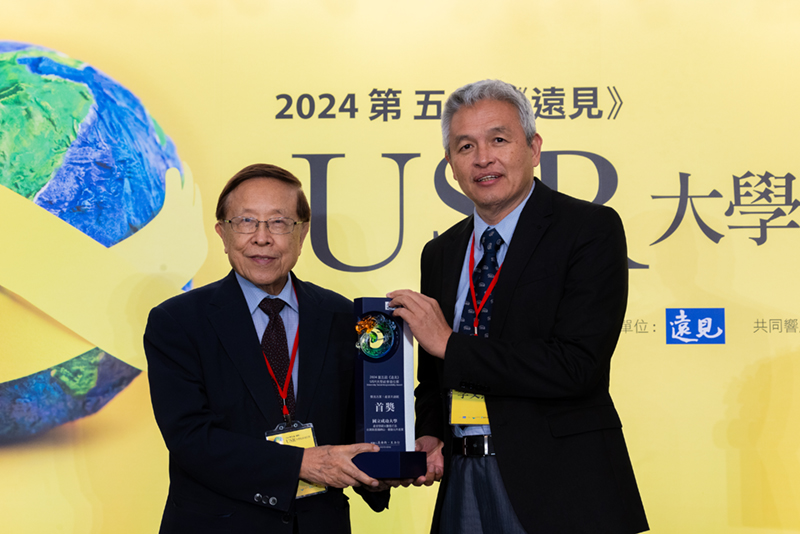
The project “Industry-Government-Academia-Research Alliance Building Taiwan’s New Protective Mountain — The Passive Component Industry” won First Prize in the “Industry Co-Creation” category, represented by Professor Wen-Hsi Lee of the Department of Electrical Engineering
First Prize / Industry Co-Creation Category / “Industry-Government-Academia-Research Alliance Building Taiwan’s New Protective Mountain — The Passive Component Industry”
Professor Wen-Hsi Lee of NCKU’s Department of Electrical Engineering, representing the project team, remarked that winning First Prize in their first participation demonstrated how industry-academia collaboration in passive components can fulfill social responsibility.
Major achievements of the project include establishing the Yageo-NCKU Joint Research Center, investing NT$40 million annually in collaborative research, producing more than 10 passive component technology patents and technology transfers to industry each year, and training over 30 master’s and doctoral students, with the goal of helping Yageo become the world’s largest passive component manufacturer. The project also developed four generations of core technologies centered on base-metal aluminum materials, driving innovations in capacitor and resistor materials, as well as carbon-neutral additive manufacturing processes for flexible copper conductors in the circular economy. These innovations have created industrial output valued at over NT$10 billion annually, led to the establishment of three startup companies with over NT$70 million in funding, and generated NT$22 million in technology transfer revenue. The project aims to establish upstream advanced material supply capabilities for Taiwan’s electronics industry and enhance Taiwan’s global competitiveness.
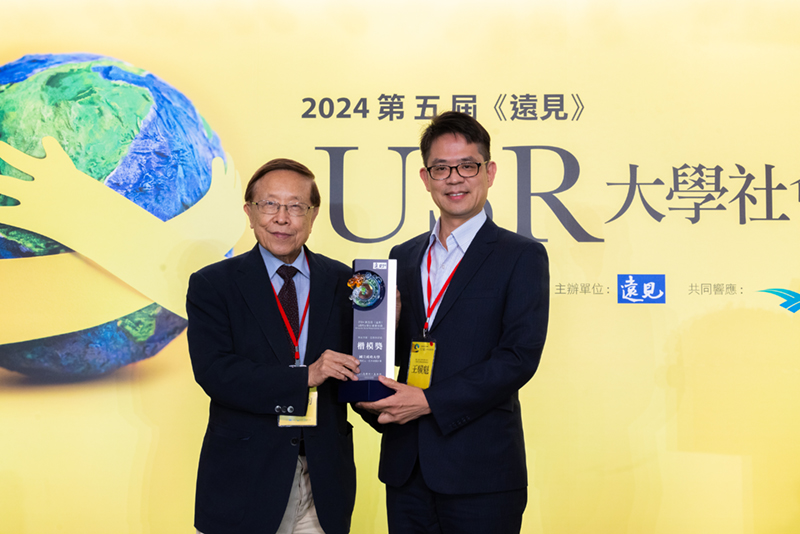
In the “Ecological Sustainability” category, the project “Tree Seekers — Giant Tree Mapping Project” received a Model Award, represented by Professor Chi-Kuei Wang of the Department of Geomatics
Model Award / Ecological Sustainability Category / “Tree Seekers — Giant Tree Mapping Project”
Professor Chi-Kuei Wang of NCKU’s Department of Geomatics, representing the project team, stated that the Tree Seekers initiative has been active for seven years. The LiDAR research team worked tirelessly to complete the giant tree mapping project in a short period of time, while climbers led by Dr. Chia-Chun Hsu often devoted their valuable weekends to the project. He also thanked YFY Consumer Products for long-term financial support and assistance in organizing events, as well as government agencies such as the Department of Land Administration, Geological Survey and Mining Management Agency, National Land Surveying and Mapping Center, Forestry and Nature Conservation Agency, and Aerial Survey Office for their support in obtaining LiDAR data and assisting with tree climbing operations. Finally, he expressed gratitude to the public and online participants who supported and joined efforts to protect giant trees.
The “Tree Seekers — Giant Tree Mapping Project,” jointly conducted by the Forestry Research Institute of the Ministry of Agriculture and National Cheng Kung University, has in recent years accelerated the discovery of Taiwan’s giant trees through airborne LiDAR data analysis and interpretation. The LiDAR data used in the mapping project originated from nationwide 3D terrain scans conducted after Typhoon Morakot by the Geological Survey and Mining Management Agency under the Ministry of Economic Affairs. To speed up the search process, the team developed automated visualization technology for giant tree cross-sections and launched a website at the end of 2020, allowing the public to help identify potential giant tree locations. Internet users became not only consumers of information but also contributors. A total of 71,751 suspected giant tree points were reviewed three times by 372 participants, reducing the number to 4,736 confirmed points. This marked the world’s first citizen science project using public participation to identify giant trees.
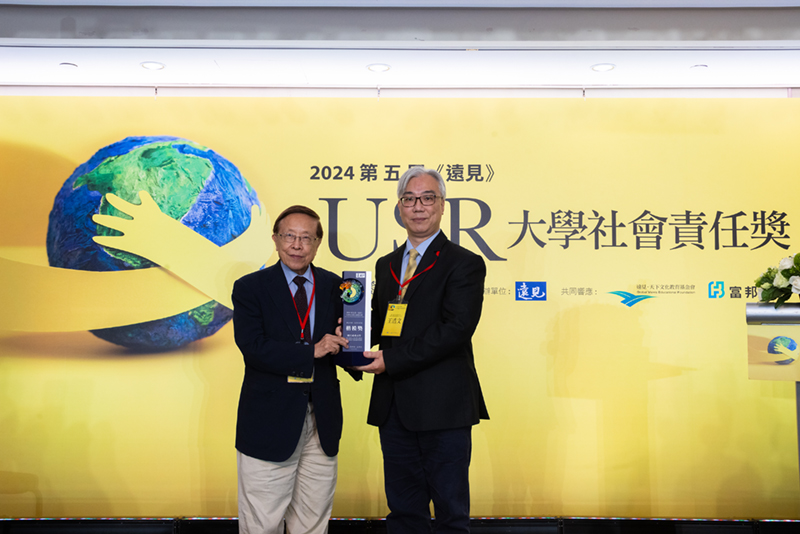
The project “Practical Marine Wildlife Conservation Actions and Educational Outreach for an Ocean Nation” received a Model Award, represented by Professor Hao-Wen Wang of the Department of Life Sciences
Model Award / Ecological Sustainability Category / “Practical Marine Wildlife Conservation Actions and Educational Outreach for an Ocean Nation”
Professor Hao-Wen Wang of NCKU’s Department of Life Sciences, representing the project team, emphasized that rescuing stranded cetaceans cannot wait even one second. NCKU has long focused on ecology, the environment, and conservation. Since 1993, faculty and students from the Department of Life Sciences have been entrusted by government authorities to handle stranded cetaceans. After more than 30 years of uninterrupted effort, the team has become one of Taiwan’s most important cetacean rescue groups and a symbol of universities safeguarding biodiversity.
NCKU’s Marine Biology and Cetacean Research Center was officially established in 2009. Over the past 15 years, the center has handled more than 300 stranding cases involving over 410 cetaceans. Among them, 32 individuals were released back into the wild after evaluation, while more severely injured animals were transported to the Sicao Cetacean Rescue Station in Tainan for rescue, medical treatment, and rehabilitation, with 10 eventually released successfully. The center has also handled more than 10 mass strandings of false killer whales. In 2013, the team received recognition from the Forestry Bureau of the Executive Yuan’s Council of Agriculture as an Outstanding Cetacean Protection Team. In 2019, the center was invited to join the Asian Marine Mammal Stranding Network. In January 2020, it conducted Taiwan’s first skeleton cleaning and preservation project for a deceased stranded blue whale. In 2022, the “Nanying Marine Conservation Education Center” was established. In 2023, both the Cetacean Research Center and its director, Professor Hao-Wen Wang, received the first Ocean Conservation Contribution Model Awards from the Ocean Affairs Council in the group and individual categories, respectively.